Last September, I received my long anticipated Framework Laptop 13. The consumer focused self-repair tech-startup announced their flagship product, the Framework 13, way back in February 2021.
The key selling point: this laptop is a modern Ship of Theseus.
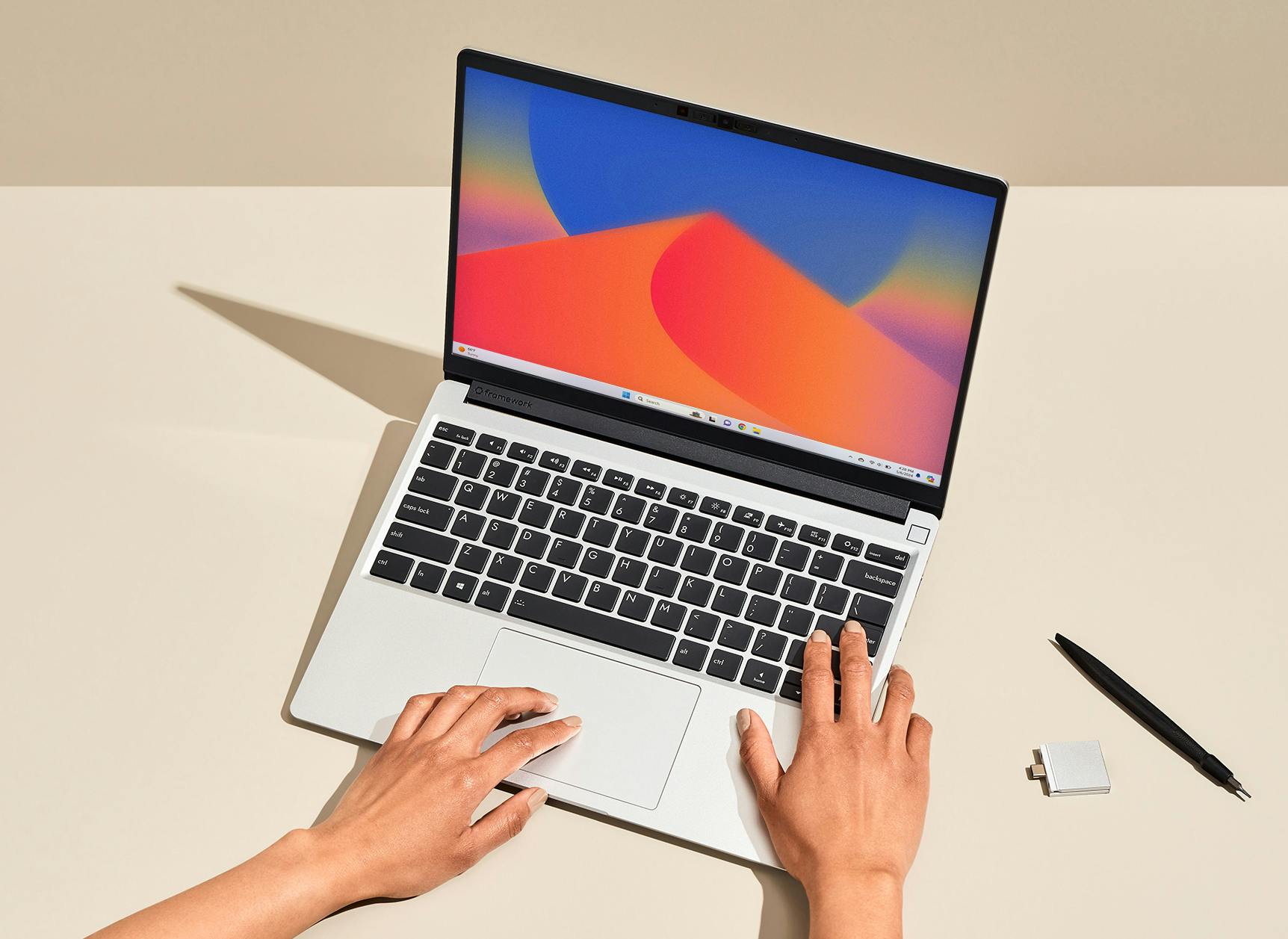
From Framework
Some Assembly Optional
Like most laptop companies (Lenovo, Dell, HP, etc), Framework offers a standard out of the box/ready to go product. Unlike those companies, they also offer a DIY some-assembly required version for a few hundred bucks less. I chose the latter.

Assembling my own Framework Laptop 13 was a huge part of why I chose it, and while some might find that tedious, for me, it offered immediate benefits.
First, getting hands on experience helps familiarize oneself with the guts of the machine. Although the median laptop enjoyer probably wouldn’t care, the diverse and underappreciated cohort of geeks and nerds (of which I identify) will find some joy in this process.
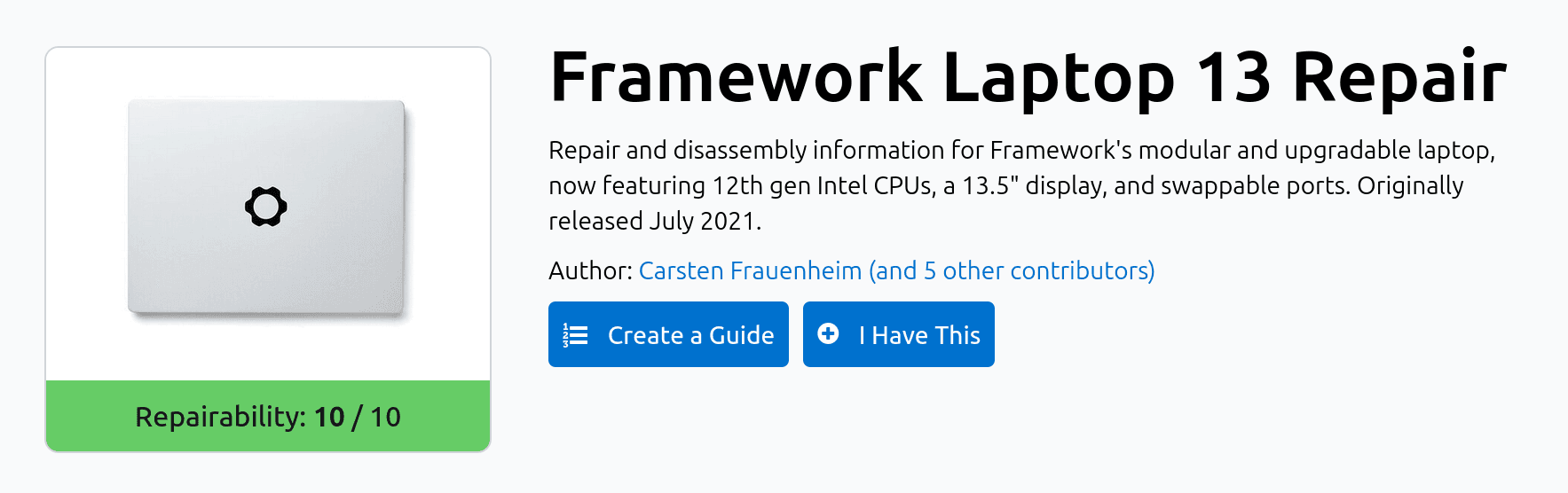
Screenshot from iFixit.com, which scored the framework a record 10 out of 10 for repairability
The second benefit is this should improve your ability to repair the laptop if the case arises. This claim of reparability is one of the key selling points of the framework. The other, of course, being the upgradability. Although I have neither upgraded nor repaired the laptop, I hope that those promised features follow through.
Long term, Framework’s plan is to sell upgrades and replacement parts to consumers. Instead of throwing away the whole laptop, like Apple sometimes resorts to, Framework believes they can convince consumers to instead repair their devices.
Thus, the entire laptop is designed to be as modular as possible. The DIY edition shows off this feature in the parts it comes with.
In the Box
| Part | Description |
|---|---|
| OS | Ubuntu |
| Processor | Ultra 7 15.5H |
| Display | 2.8K |
| Memory | 32GB DDR5 |
| Storage | 2TB M.2 NVMe™ |
Beyond the core components, another significant feature is the hot-swappable I/O. I purchased the following:
- 2 x USB-C (Aluminum)
- USB-A
- HDMI (3rd Gen)
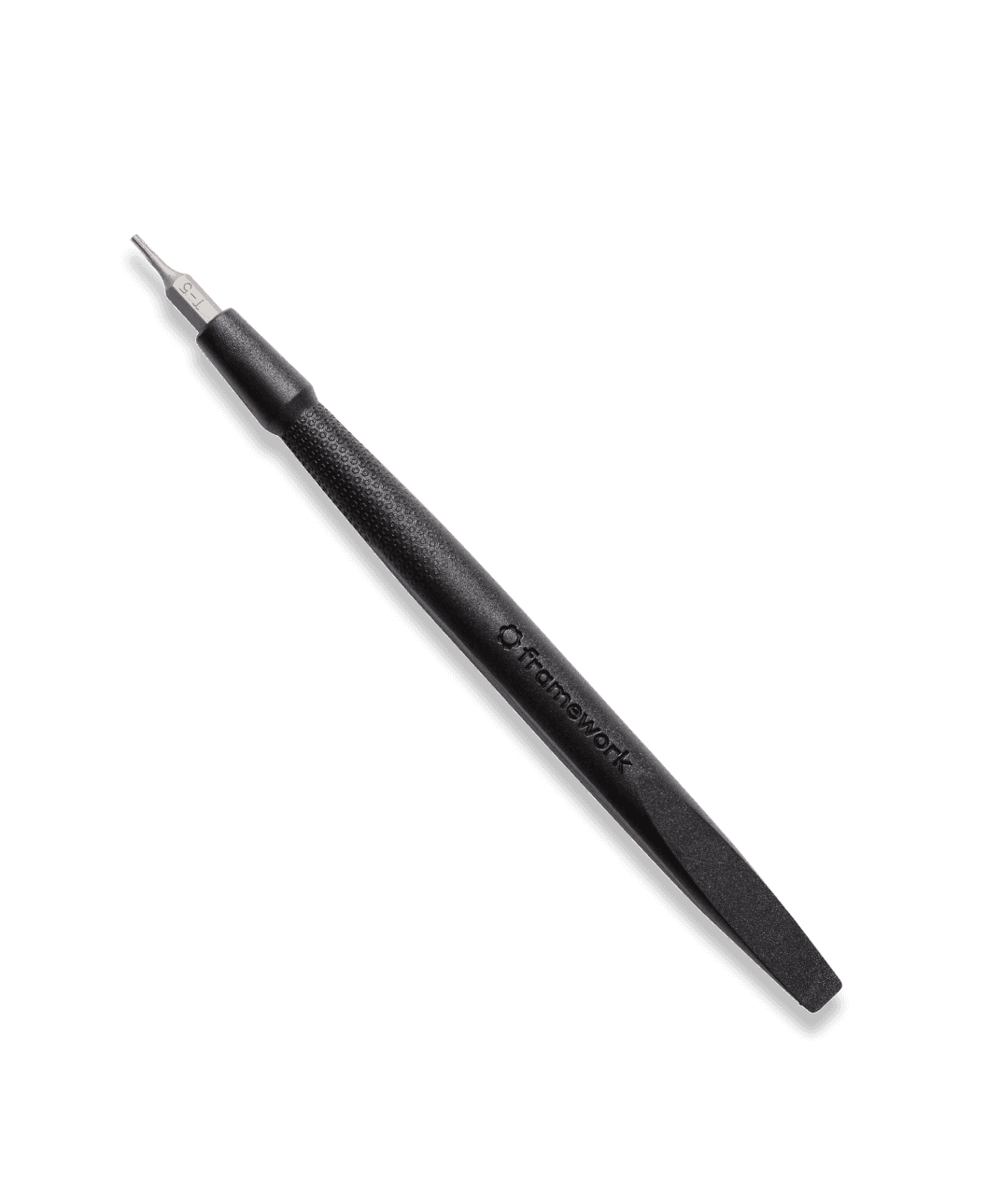
Finally, every framework laptop comes with a small screwdriver: the only tool that you need to service the laptop.
IO
Although less of a headline item, the customizable IO is a fairly unique feature.

These expansion cards come in many flavors. Besides what I purchased, they include micro SD, display port, Ethernet, and even external memory. As an additional benefit, these expansion cards are usable across all products Framework offers. Further, they are also hot swappable between each other, allowing you to swap and re-order the cards as you need without powering down.
Unfortunately, I find myself avoiding that particular feature. While it is cool, I’ve hardly used the particular HDMI port I purchased. Though I’m sure there will eventually come an opportunity where moving the ports around as needed will benefit me.
The Battery
Like the rest of the laptop, the battery is also replaceable. Theoretically, as battery power density increases, and they are able to power your laptop for longer in less space, I should be able to improve battery performance over time.
Unfortunately, battery life was a major pain point early on. Linux, not just Framework, laptops are notorious for their lower batter life (when compared to Windows).
I ran into the issue for a very long time. Whereas my previous laptop could be used for the better part of the day off wall-power, I found the framework to struggle to make it to 6 hours. Eventually, through tinkering with settings, I was able to improve this slightly. Though I dare not try and replicate what I had done.
When researching for this review, it appears that Framework eventually published a battery life guide. Though it appears to be solely available for Ubuntu, it may help some. I personally found it a bit hard to follow, there is no simple “make the battery good” button you can press. Though annoying, I primarily blame Linux laptop support, rather than Framework specifically.
Big Question
For the particular type of consumer I represent, I believe the Framework is a good value. Unfortunately, there are a few major catches.
-
Framework laptops are not a particularly affordable option. While you may get second hand models at a lower price, I can’t guarantee the typical normie won’t balk at the sticker price.
-
I’m also not sure of the general approachability of the device. I’m not sure, as an example, I could recommend the laptop to my Mother. Without the name-brand recognition and brick-and-mortar infrastructure of a company like Apple, I’m not sure the repairability and upgradability will be particularly attractive.
This second point is quite important. Looking at the wider laptop space, one can not avoid the dominance of Apple. While I find the repairability features highly valuable, I worry that the laymen, long abused by Apple’s anti-consumer tendencies, is not in the mental space to prioritize it when purchasing a laptop.
Like the first consumers questioning why a horseless carriage might be superior to their trusty steed, I believe that a shift in the public consciousness on repairability will be essential for Framework’s success or failure. Though there are early signs that consumers are moving that way.
Conclusion
Like the Ship of Theseus, this laptop evolves as I replace worn-out or obsolete components. Although may change, it remains fundamentally mine.
While I’m happy with my purchase now, long-term performance depends on factors beyond the initial build matter. Will Framework go out of business like so many others? Or will their parts based model turn profitable? Time will tell if Framework can deliver a machine that remains fundamentally sound over many years.